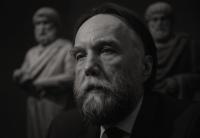
Confusion 196 | Dugin 2 - The Philosophical and Political Mind of Russia | Alexander Dugin | Special Interview
The Fourth Political Theory for Nepal is a synthesis of democratic, monarchic, and socialist principles, recalibrated to fit Nepal’s unique context.
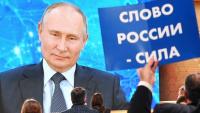
It is worth paying attention to the fact that the Treaty refers to a comprehensive partnership. This indicates that there are many non-public elements in addition to those points and articles that are openly stated and signed by Russian and Iranian Presidents Vladimir Putin and Massoud Pezeshkian following their talks in the Kremlin.
Alexander Dugin argues that Russia must overcome the dictatorship of mediocrity in its cultural sphere to establish a distinct, civilizational cinema and reclaim its unique cultural identity in a multipolar world.
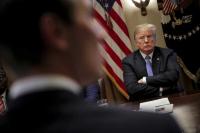
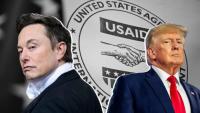
What has transpired in the United States following Donald Trump’s victory in the presidential elections, the inauguration process, and the transfer of power, demonstrates that we are witnessing a rapid process of conservative revolution in the U.S. The system of values is changing in a direction almost diametrically opposed to its previous trajectory. The principles Trump and his team are proclaiming, along with the initial steps they are taking, stand in complete contradiction to the left-liberal ideology underpinning the orientations, strategies, and actions of the globalists.
Currently, everyone in Russia and across the world is clearly puzzled about what is happening in the United States. President-elect Donald Trump and his close associates, particularly the passionate Elon Musk, have launched an almost revolutionary level of activity. Although Trump has not yet assumed office — this will happen on January 20 — America and Europe are already shaking. This is an ideological and geopolitical tsunami that, frankly, no one anticipated. Many expected that after being elected, Trump — much like during his first term — would revert to a more or less conventional policy, albeit with his charismatic and spontaneous traits. It can now be said with certainty: this is not the case. Trump is a revolution.
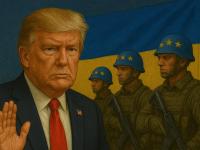
Alexander Dugin discusses the illegitimate regime in Ukraine, the crumbling globalist order, and the rise of a new ideological confrontation between the Trumpist West and the traditionalist multipolar world.
Alexander Dugin opposes liberal racism and globalist homogenization, emphasizing the richness of collective ethnic and cultural identities.
Rejecting 20th-century totalitarian frameworks, Alexander Dugin calls for ideological clarity and fair debate in a multipolar world led by genuine freedom of speech.
Alexander Dugin reflects on the passing of Jean-Marie Le Pen, praising the steadfast right-wing leader’s lifelong resistance against liberal globalism.
The trumpism in IR is reorganisation of Western hegemony on the basis of right liberalism and Western identity.
Alexander Dugin’s text contrasts two opposing forces within the West: the globalist "Monster-West," represented by liberal elites and their network of influence, and the "MAGA-West".
Alexander Dugin integrates Freudian, Jungian, and Guattarian frameworks to analyze civilizations as dynamic systems shaped by unconscious structures, material flows, and rationalized universes, offering a critique of Western modernity and envisioning multipolarity as a reterritorialized civilizational order.
Firstly, I believe in our people, I believe in our State, I believe in Russian history. This war is not an accident. Maybe it is the most important and the most sacred war of our history, which we are now waging with the West on the territory of Ukraine
What the life after woke looks like? If we want to overcome woke, we need to identify its roots and extract them. The roots are nominalism, hyper-individualism and liberalism as ideology...
Alexander Dugin argues that the nation’s sovereign heart calls for crushing liberalism while unleashing the creative and patriotic spirit of the Russian people to affirm their imperial destiny.
The Strauss-Howe theory is particularly relevant when addressing the dynamic between sociality (holism) and individualism. This is akin to the famous L. Dumont's dilemma where sociality represents the High, the beginning, and spring, while individualism signifies the Crisis, the end, and winter, with the individual portrayed as Krampus.
Richard Malcolm Weaver, Jr. was an American scholar known for his contributions to conservative thought. Here are some key ideas associated with him..
A profound shift in the global perception of Israel — and perhaps of the Jewish people as a whole — is underway. After the catastrophe European Jews endured under Hitler during World War Two, they evoked widespread pity, compassion, and sincere sympathy on a global scale. This moral capital facilitated the establishment of the State of Israel. The Holocaust, or Shoah — signifying the horrors and persecutions suffered by Jews — served as the foundation for the universal consensus: after such suffering, the Jewish people unquestionably deserved their own state. This sacred status of the Holocaust became a cornerstone of Jewish identity and moral capital.
In this text, Alexander Dugin explores the concept of horror, drawing from Heidegger's distinction between fear (external and explained) and horror (internal and undefined).
How reconcile multipolarity with trumpism? It is not clear yet. Among trumpists there are those who can agree with that and those who are against. Neocons don’t take part in trumpism directly (being globalists) but their influence is still present.
There are situations where the predictions and plans made beforehand realise in the field of facts. Then you can follow them comparing and reality check is backed by the correlation with forecast: this is correct, that is wrong, that is deviation.
Alexander Dugin argues that the unfolding chaos of 2025 lies in the triadic uncertainty of a dying unipolarity, the theoretical opacity of multipolarity, and the unpredictable conservatism of Trumpism, all converging to demand a new ontology of global order.