Global Conference on Multipolarity and Fourth Political Theory
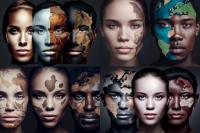
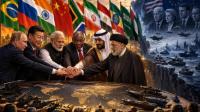
Dear friends! You are invited to participate 29 April in international conference on Multipolarity. It will last all day in order to cover space of the planet. Most welcome are people from those countries that are not too active in promoting multipolarity or rather we don't know well enough - Southern Asia, Africa, Oceania. We plan speaking any one on her/his native language. WE are the humanity. Not them.
We are proud to announce the Global Conference on Multipolarity and Fourth Political Theory, co-organized by Nova Resistência and Alexander Dugin.

Pedophile Presidents and the Epstein Files

The publication of three million Epstein files is a foundational event of such magnitude that it provokes genuine bewilderment: why are domestic media outlets failing to give it the attention it deserves? This is a true event—if you will, an anticipated yet still shocking “black swan,” or what political analysis calls a “game changer,” a transformation of the conditions of the game.

Eschatological Optimism, the posthumous philosophical testimony of Daria Platonova Dugina

Eschatological Optimism, the posthumous philosophical testimony of Daria Platonova Dugina, explores and develops this ancient idea amidst the overwhelming kaleidoscope of the cave of the modern world. Engaging a vast spectrum of philosophical, theological, sociological, and literary perspectives, Dugina shows that the decision to decipher and face the illusions of our “reality” is only the beginning of an intellectual, existential, spiritual, and political journey which diverse thinkers, ancient and modern, have dared to undertake.

The concept of the poor subject

A characteristic feature of Russian philosophy, according to some historians of Russian philosophy, is the ontologism of thought. The position of ontologism in philosophy, unlike the opposite position of gnoseologism, implies the primary consideration not of the process of thinking, but of the object of understanding. Being on the side of the ontological, we seek first and foremost to identify and answer the question: WHAT is, WHAT is the object of our knowledge, WHAT is the focus of our intellectual intuition. Adherents of the ontological model seek, first of all, to find among all that 'flows and changes' a certain fundamental point, a fixed point, like a large stone in a fast-flowing mountain river.

The novel Laurus as a manifesto of Russian traditionalism

The novel-life, a 'non-historical novel' as the author Evgeny Vodolazkin (doctor of philology, specialist in ancient Russian literature) calls it, is a description of the destiny and inner development of Arseny the healer. After receiving medical training from his grandfather Christopher, Arseny enters life with all its complexities, temptations and trials. From the beginning, Arseny's profile betrays a man called in spirit and marked by a special gift, an unusual charisma. He is mobilised by a higher power to serve people. He is not of this world, but he serves people of this world. Already in this we can see the plot of suffering and pain.

The “Right-Wing Gramscianism” Phenomenon: The Experience of the “New Right”

The “New Right” is an ensemble of intellectual movements that appeared in 1968 as a reaction to ideological crisis and the strengthening of liberal hegemony in Europe. By 1968, the classical “rightwing” movements were riddled with liberal ideological motives, such as the adoption of capitalism, pro-American sentiments, and statism. In turn, the “left-wing” agenda, the core of which was constituted by opposition to capitalism [1], was also affected by liberal influences. Egalitarianism, individualism, the negation of differences between cultures, and universalism were rendering “left-wing” movements allies and partners of the liberal doctrine.

Darya Dugina at the 16th International Conference “The Universe of Platonic Thought”

Political philosophy has always been denied full recognition, focusing on analyzing the metaphysical aspects of Neoplatonism. Neoplatonic concepts such as “permanence” (μονή), “emanation” (πρόοδος), “return” (ὲπιστροφή), etc. were treated in historical-philosophical works separately from the sphere of the Political. Thus, the Political was interpreted only as a stage of ascent toward the Good, embedded in the rigid hierarchical model of Neoplatonic philosophical thought, but not as an independent pole of the philosophical model.

On the Necessary Extermination of the Global Class

Over the past thirty-five years in our country—as in nearly the entire rest of the world—a distinct social group has taken shape that can be described as the “global class.” These are people who, during this period, either succeeded in amassing vast fortunes or integrated themselves into global processes at the level of culture, science, and technology. Quite often, it was both.


Second world, semi-periphery and state civilisation in a multipolar world theory. Part Three.

We come to a third concept, crucial for understanding the transition from a unipolar to a multipolar world and the place of the BRICS countries in this process. We are talking about the concept of the civilisation-state. This idea has been formulated by Chinese scholars (in particular by Professor Zhang Weiwei) and most often the concept of the civilisation-state is applied to modern China and then by analogy to Russia, India, etc. In the Russian context, a similar theory was put forward by the Eurasians, who proposed the concept of the Peace-State. Actually, in that trend, Russia was understood as a civilisation, not just one of the countries, hence the main Eurasian concept - Russia-Eurasia.

Noomachy - Wars of the Minds: War as an application for the genuine philosophy

In the Greek Orthodox tradition, churches that are dedicated to Sophia the Divine Wisdom have their patronal festival on the day of Mid-Pentecost. It means that today is truly a day of philosophy, truly a day of the Divine Wisdom, which our ancestors, our founding fathers handed down to us. As you know, in the Divine Liturgy, there is a priestly exclamation: "Wisdom! Arise!" Sometimes our theologians and philosophers try to contrast divine wisdom with human wisdom. But in the original Greek text of the liturgy, the word 'Sophia' is used. Sophia refers to both meanings of wisdom: divine wisdom and human wisdom. These two meanings do not totally coincide, but, at the same time, they are not in opposition.

The winning philosophy

Meaningful internal reforms must logically begin in Russia. This is required by the SMO, which, in the extreme, has aggravated the contradictions with the West - with the entire modern Western civilisation. Today anyone can see that it’s no longer safe to simply use the norms, methods, concepts, products of this civilisation. The West spreads its ideology along with its technologies, permeating all spheres of life. If we recognise ourselves as part of Western civilisation, we should voluntarily accept this total colonisation and even enjoy it (as in the 1990s), but in the case of the current confrontation - which is fatal! - this attitude is unacceptable. Many westerners and liberals became fully aware of this and left Russia at the very moment when the break with western civilisation had become irreversible; the situation became irreversible on 24 February 2022, and even two days earlier - at the time of the recognition of the independence of the DPR and LPR - on 22 February 2022.

The Problem of "Nothing" in Philosophy

This article is devoted to the most important philosophical problem – the problem of Nothing. At first glance, nothing is easier than nothing, but in fact, nothing is more complicated. When a person begins to think about being, including about his own being, about his life, he will sooner or later come across the topic of the border. Being is. But in order to truly appreciate it, it is necessary to correlate it with something. This is where Nothing comes in.

Peter Mamonov: When The Abyss Hums

During the pandemic, we began to lose famous people not one by one, as usual, but in whole blocks. Which is very sad. We do not have time to recover from one loss, as immediately the next. July was particularly troubling. I knew many of those who had passed away personally and watched others with interest and attention for many years.
Today I would like to remember Peter Mamonov, who died from the coronavirus (and why else is everyone dying today from…).

Pages