Peter Thiel, the Deeper State, and the Antichrist 2.0
Last spring, reflecting on Trump’s first steps in power, I wrote an article in which I raised the issue of an “even deeper Deep State.”




Last spring, reflecting on Trump’s first steps in power, I wrote an article in which I raised the issue of an “even deeper Deep State.”

I admire Italy, or more precisely the many societies, cultures, peoples, and states comprising the history of Italy from the Etruscans and Roman Empire to the Vatican and Risorgimento. I dedicated a separate book to the “Latin Logos,” where I expressed my love for the Italian spirit and for the beauty of dramatic and elevated Italian thought.

In the wide-ranging and detailed international reflection on geopolitics, there is a tendency to reflect on the major intercontinental systems, concentrating mostly on the two macropowers that the 20th century has consecrated, namely the United States of America and the Russian Federation, taking them as references in an almost univocal manner; when new major powers present themselves, as has been the case since the beginning of our century, there is an attempt to make a comparison with the two majority powers and study the relations and ties that exist with them. This manifests, in my opinion, a kind of formal flaw that is entirely legitimate but at the same time necessary for revision.

Postmodernism is the paradigm towards which the transition from the previous paradigm, the modern, is taking place. The transition is taking place before our eyes, so today's society (at least western society, but also planetary society as far as western influence is concerned) is a society in transition. Not only is Russian society transitive in a broad sense, but also the social matrix that defines the life of humanity to this or that degree is changing its qualitative nature today.

Let us trace the fate of the Logos in the Postmodern. It is extremely important to always remember that the Logos is one of the manifestations of the heroic myth, i.e. the product of the diurnal regime (according to J. Durand's classification). Nor is it the only one, nor is it absolute. The Logos includes the antithetical and pleonasmic sides of the heroic myth (heterogeneous homogenisation) and takes them to their ultimate limit, but it also leaves aspects of the Diurnal myth such as the direct and frenzied will to power, passionality and hyperbolisation in the unconscious. Of course, these aspects of the Diurnal - relatives of the Logos - also penetrate the same, but not explicitly, but through the inertia of the choreic attraction of the heroic myths to one another (i.e. not logically).
The Russian authorities are eager to demonstrate compliance with certain rules in the war in Ukraine. The West has believed since the beginning of the SMO, and in fact since 2014, with the annexation of Crimea, that Russia had broken the (beneficial to the West) rules. And even if it did not, it would mean nothing. Therefore, the West is playing without rules against Russia.

I have noticed that the consciousness of many people [Russian citizens, ed.] cannot cope with the events of 24 June. So they tend to say: 'it didn't happen'; 'it wasn't real'; 'they were there on purpose'. This is the only way to numb the acute pain of what happened.

I would like to introduce the Star of Ishtar, the symbol of Eurasianism. The symbolism of this icon is so powerful and, in my opinion, necessary of a deeper understanding for the future of our world.

According to the dictionary of foreign words in the Russian language, the term "pole" originates from the Greek word "polos", meaning the extremity of an imaginary axis around which a wheel rotates1.
Exiled for three centuries by the Modern, the traditional world suffers from an inability to project its future with the inevitable collapse of the first and last remaining political theory of the Modern.

Presentation given by Israel Lira on Saturday, April 29 in the framework of the Global Conference on Multipolarity and Fourth Political Theory thanks to the organization of cultural and social movement Nova Resistencia of Brazil, The International Russophile Movement and The Thinkers Forum of China, under the direction of the Tsargrad Institute (Moscow)

My name is Mitsuhiro KIMURA of the Japanese patriotic organization Issuikai. I am a patriotic social activist.

Transcript of Pepe Escobar's speech at the Global Multipolar Conference on 29 April 2023.
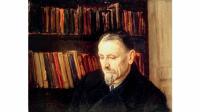
Peter Nikolayevich Savitsky's works, from letters and poems to scientific publications, make frequent use of the concept of rhythm. The idea of applying rhythm to history is obviously not accidental, especially when one considers the etymology and meaning of the word.
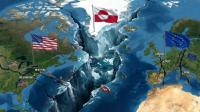
Alexander Dugin on the irreversible fracture of the West, Trump’s imperial gambits, and the emergence of five competing Western poles.
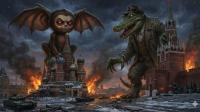
Alexander Dugin on Cheburashka as a symptom of late-Soviet infantilism and the degeneration of heroic archetypes.

Alexander Dugin outlines how Trump is tearing off the veil of civility in geopolitics, reclaiming the Western Hemisphere for a New World Empire that challenges the Old World to rise to the occasion with avant-garde maneuvers and no-holds-barred force.

At times, one may get the impression that we are fighting merely to preserve the status quo, or simply fending off the challenges piling up against us.
By fighting concretely for our Civilization against the satanic global civilization, we help other Civilizations to do the same.

EU is an expressive example of how democracy can fail and become its own opposite. But it rests to define whether it is the problem of EU or the natural feature of the democracy itself?

100 days of Trump - enormous effort to win the evil. Evil is still here. But who doubted that? It is a long way. Don’t give up, don’t lose hope. There is no way back. Die is cast.

Macron visited the Masonic Grand Lodge of France (Scottish Rite). In his speech, he attacked the Dark Enlightenment theory of Curtis Yarvin and Nick Land, as if he were fighting Trump himself. Until yesterday, mentioning the word “mason” was seen as a clear sign of conspiracy theory.
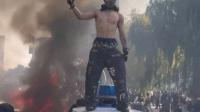
LA riots are cut and paste of Kiev’s Maidan. The same methods, same pictures. In Kiev it was against Putin. In LA it is against Trump. Globalists hate them both.

The Absolute Spirit is not a beginning but the result of the complete cycle of the unfolding of subjectivity—hence Hegel is not an idealist but a phenomenologist. However, he is a phenomenologist of the Radical Subject.