Alexander Dugin on Global South | Traditional Values of Global South | The West and Rest | Russia |





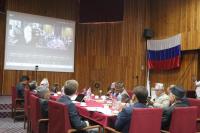
Kathmandu (Keshav Bhattarai): On November 23, 2024, with the support of the Russian House in Nepal, a conference by philosopher and political scientist Alexander Dugin was held at the Russian House in Kathmandu on the theme “Emerging Multipolarity: South Asian Context”(Зарождающаяся многополярность: южноазиатский контекст). The conference gathered numerous distinguished guests, including ambassadors, scholars, and former ministers. At the very beginning of the event, the broadcast was targeted by hackers who disrupted the live stream with obscene content. But, technical issues were promptly resolved.

Russia’s entire future hinges on victory in Ukraine. Whether Russia will continue to exist at all depends on this outcome. Thus, no topic is more important than this war. It is sacred.

According to Professor Dugin, Soros is against anything good, or successful and reasons this to be his motive for opposing PM Narendra Modi.

To realise its immense potential as a cohesive pole in this new global order, the Islamic world needs to decide on the best way forward. Inspiration can be found in the Abbasid model

India plays a “crucial” role in the new global architecture and balance of power, Russian political scientist and philosopher Aleksandr Dugin has said in an interview with RT. This includes creating a “decolonized” mindset and shifting from “Western-controlled narratives,” he added.

I originally envisioned this article as a review of five semi-randomly selected books by esteemed Russian Professor Alexander Dugin. However, as my experience with mass surveys has sometimes proven murky, with me feeling like I give short shrift to someone or some part of the analysis, I decided to take a slightly different approach. Accordingly, herein I strongly recommend a set of books by Dugin, about Dugin, or associated with Dugin.
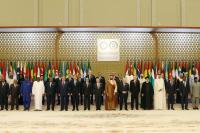
Alexander Dugin asserts that the recent Arab-Islamic summit in Riyadh, marked by unprecedented unity among leaders like Assad, Erdogan, and Mohammed bin Salman, signals a critical turning point in the Islamic world’s response to Zionist aggression and the Palestinian crisis.

Alexander Dugin argues that Russia’s uncompromising stance on fully integrating Ukraine into its sphere is a geopolitical imperative, driven by existential necessity rather than expansionist ambitions, and must be clearly communicated to Western leaders like Trump to avoid disastrous misunderstandings.
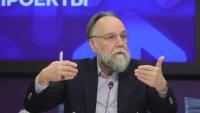
During the "Unified Cultural Media Code and Transnational Media Projects" session at the CIS forum "Media Development in a Changing World," Dugin stated that, in his view, the CIS countries currently lack a unified media code, though one is necessary.

Alexander Markovics reviews Alexander Dugin’s book Politica Aeterna: Political Platonism & the Dark Enlightenment.
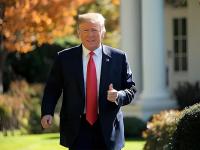
The victory of Donald Trump in the U.S. presidential elections is a historic event of global significance, comparable to the events of 1917 or 1945. It marks the beginning of a fundamental shift in the world order, requiring deep analysis and explanation. Yes, in Russia, many consciously attempted to downplay the importance of these elections. However, this was done to avoid “jinxing” it, as Russians are very mindful of their words and prefer not to say everything they think. Sometimes, they even go to great lengths to conceal it.

The Eighth Tsargrad Congress at the Cathedral of Christ the Savior was remarkable.
In essence, we are changing our ideology for the third time in 35 years. Until the early 1990s, society was under the dictatorship of Marxism-Leninism. This was obligatory, and (even if formally) everything was built upon it — politics, economics, science, education, and law. Everything, really.

Alexander Dugin reveals the deep state as a corrupt Western cabal, infiltrating the U.S. and Europe to manipulate elections, crush populist leaders like Donald Trump, and impose its liberal-globalist agenda by deceitfully posing as a protector of democracy while ruthlessly subverting the will of the people.

Alexander Dugin contends that Donald Trump’s rhetoric is reshaping the American political landscape by addressing the growing discontent with the Democrats’ destructive war-driven foreign policy, while Kamala Harris, lacking both vision and charisma, struggles to connect with an increasingly disillusioned electorate.

Alexander Dugin argues that the escalating conflict in the Middle East marks the beginning of a larger global war, as Iran and its allies confront Israel and the Western hegemony, opening a second front following Ukraine.

The concept of “pagan” has an Old Testament origin. In Russian, “gentiles” were called peoples. The ancient Jews used the term “am” (עם) to describe themselves, and “goy” (גוי) to describe other nations. Jews = the people, it is one (chosen), and the “languages” of the nations are many. Thus the Jews themselves worshipped one God, and were sure that all other nations (tongues) worshipped many gods.